



A valuable resource for tourism development
The beginning of 2026 saw an impressive start with the Swallow-tailed Boat Racing Festival in Mường Lay ward, attracting tens of thousands of visitors. One of the festival’s highlights was the recognition by the Vietnam Records Organization of the record “Dance of unity along the Đà River,” featuring more than 10,000 participants. The spectacular performance stretched 6.5 kilometers from Nậm Cản Mechanical Bridge through Mo and Ổ villages, linking provincial road 142 with the lakeside route to create a breathtaking cultural spectacle.
According to Lù Văn Ánh, Vice Chairman of the Mường Lay ward People’s Committee, the “Dance of unity along the Đà River” recreated traditional xòe dances and the iconic circle dance of the Thai ethnic group. Beyond preserving cultural traditions and strengthening community solidarity, the event also showcased Mường Lay as a dynamic, creative, and welcoming destination for cultural tourism.
For many years, the Ban Flower Festival, one of Điện Biên’s signature tourism events, has served as a vibrant platform for preserving and promoting the province’s rich ethnic cultural heritage. Traditional xòe dances, khèn performances, bamboo dances, and folk songs of the Thai, Hmong, and Hà Nhì peoples are vividly presented in open cultural spaces, allowing intangible heritage to thrive in contemporary life while becoming attractive tourism products.
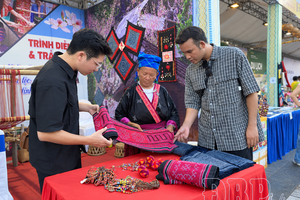
Lò Thị Viên, Director of the Lào Na Sang 2 Brocade Weaving Cooperative in Núa Ngam commune, said that the cooperative regularly showcases traditional brocade products during the festival, introducing visitors to the Lao people’s weaving craft in Điện Biên, recognized as a National Intangible Cultural Heritage. The festival not only promotes the community’s unique cultural identity but also enhances product value, expands market opportunities, and provides fresh motivation to preserve and develop this traditional craft in modern society.
The diversity of Điện Biên’s traditional cultural assets has created a colorful cultural landscape that gives the province a distinctive tourism identity. In 2025, Điện Biên welcomed more than 1.45 million visitors, generating over VND 2.645 trillion in tourism revenue. During the first five months of 2026 alone, the province received approximately 850,000 visitors, with tourism revenue reaching VND 1.539 trillion, an increase of 118% compared to the same period last year.
Nevertheless, this “gold mine” of cultural heritage has yet to be fully utilized. Tourism products remain fragmented, visitor stays are relatively short, and tourist spending remains modest. Some traditional cultural values are at risk of fading, while tourism infrastructure and high-quality human resources continue to fall short of demand. These challenges must be addressed if cultural heritage is to become a genuine competitive advantage for Điện Biên.
.png)
Turning heritage into a driver of growth
Earlier this April, the Ministry of Culture, Sports and Tourism officially added the Thai People’s village worship ceremony in Điện Biên province to the National List of Intangible Cultural Heritage. The recognition marked not only a source of pride for the Thai ethnic community but also another important milestone in preserving and promoting traditional cultural values.
With this latest recognition, Điện Biên now possesses 24 National Intangible Cultural Heritage elements. Together with two UNESCO-recognized heritages - Then Practices of the Tày, Nùng and Thái ethnic groups in Vietnam and the Art of Thai Xòe Dance - the province boasts a rich and distinctive cultural resource that provides a strong foundation for sustainable tourism development.
However, preservation alone is not enough. The real objective is to unlock the economic potential of these cultural treasures and transform them into new engines of local growth.
In recent years, many traditional ceremonies and cultural practices, including the Then rituals of the White Thai people, the Khơ Mú Rain-Praying Ceremony, and the Cống people’s Cockscomb Flower Festival, have been regularly featured at provincial festivals and cultural events. Once confined to local communities, these traditions are now being shared more widely through vivid performances and immersive experiences. Innovative approaches to heritage preservation and promotion are gradually creating unique tourism products that attract visitors.
The live outdoor performance “The Legend of U Va,” staged during the Ban Flower Festival, is a notable example. Folk tales, traditional xòe dances, and Thai courtship songs are performed within an authentic village setting, offering visitors an immersive and emotionally engaging cultural experience. When heritage is interpreted through artistic storytelling, modern technology, and experiential tourism, its economic value becomes far greater than that achieved through conventional preservation alone.
To implement its tourism development strategy, on December 31, 2025, the provincial Party Committee issued a resolution on tourism development for the 2026-2030 period, with a vision toward 2035.
Among the key measures outlined are reviewing and refining tourism-specific policies, prioritizing community-based and eco-tourism, and developing distinctive tourism products. The resolution also expands tourism development along major routes, including Điện Biên Phủ-Mường Lay, Điện Biên Phủ-Mường Ảng-Tuần Giáo, and Điện Biên Phủ-Tủa Chùa-Sín Thầu, while positioning Điện Biên Phủ and Mường Phăng as central tourism hubs connected to surrounding destinations. These strategic directions provide an important framework for maximizing the value of cultural heritage in a focused and sustainable manner.
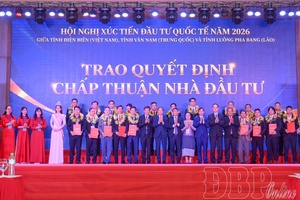
At the same time, the province is actively attracting private investment. During the recent Điện Biên Investment Promotion Conference, the provincial government signed 22 memoranda of understanding and granted investment approvals for numerous large-scale projects, including several tourism developments. These investments are expected to provide a significant boost to the tourism sector while creating new opportunities to showcase and capitalize on the province’s rich cultural heritage.
Cultural heritage is not merely a legacy preserved through generations, it is also a valuable resource for future development. With thoughtful preservation, innovative interpretation, and integration into high-quality tourism products, Điện Biên is well positioned to transform its cultural wealth into a powerful driver of economic growth, making tourism a leading pillar of the provincial economy in the years ahead.
Thu Hằng
.jpg)
.jpg)
.jpg)
.jpg)
.jpg)
.jpg)
.jpg)
.jpg)
.jpg)
.jpg)
You have 500/500 characters left
Please enter 5 or more characters!!!